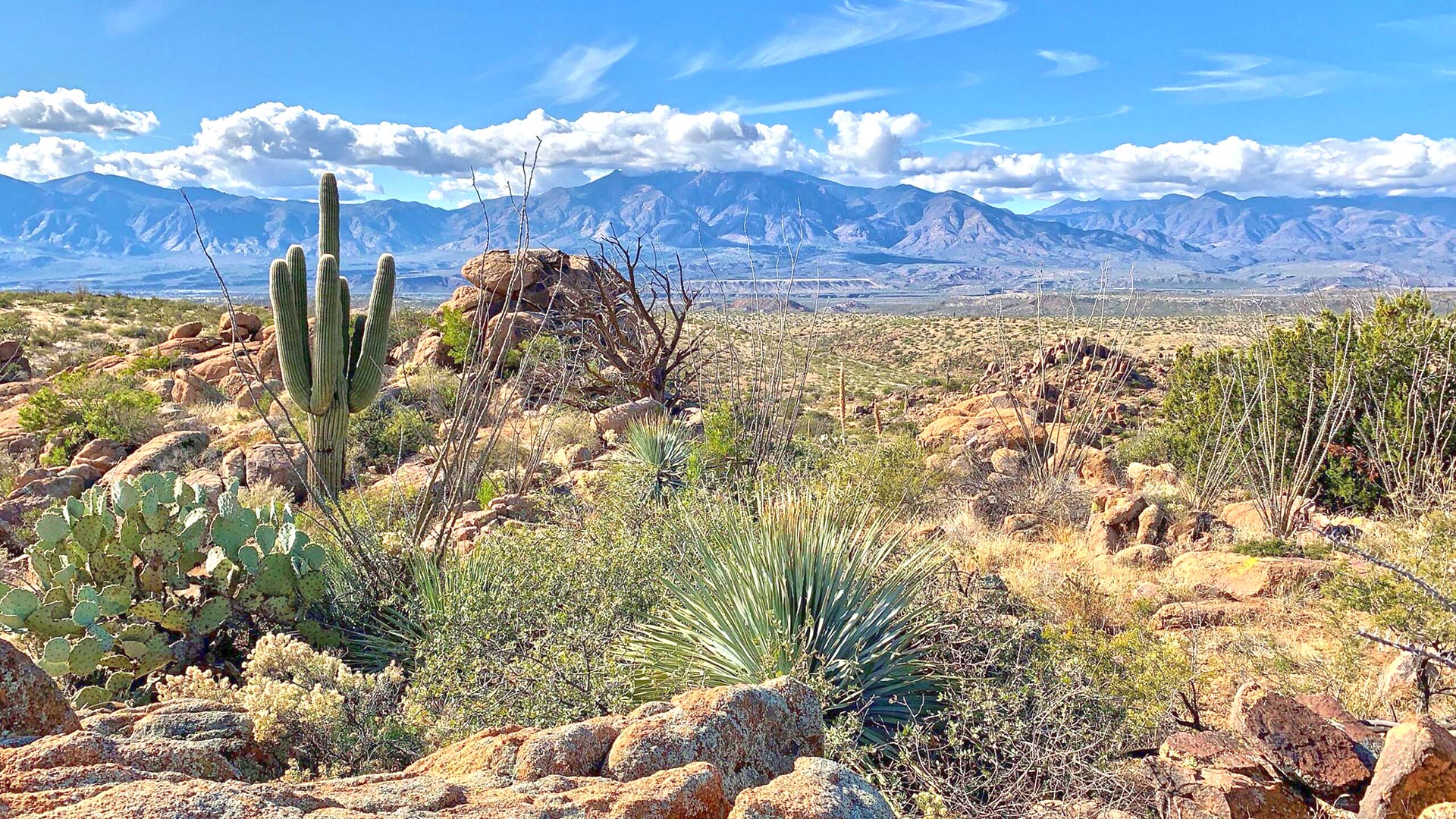
Welcome to the Arizona Native Plant Society!
The Arizona Native Plant Society is a statewide nonprofit organization devoted to Arizona's native plants. Its mission is to promote knowledge, appreciation, conservation, and restoration of Arizona native plants and their habitats.
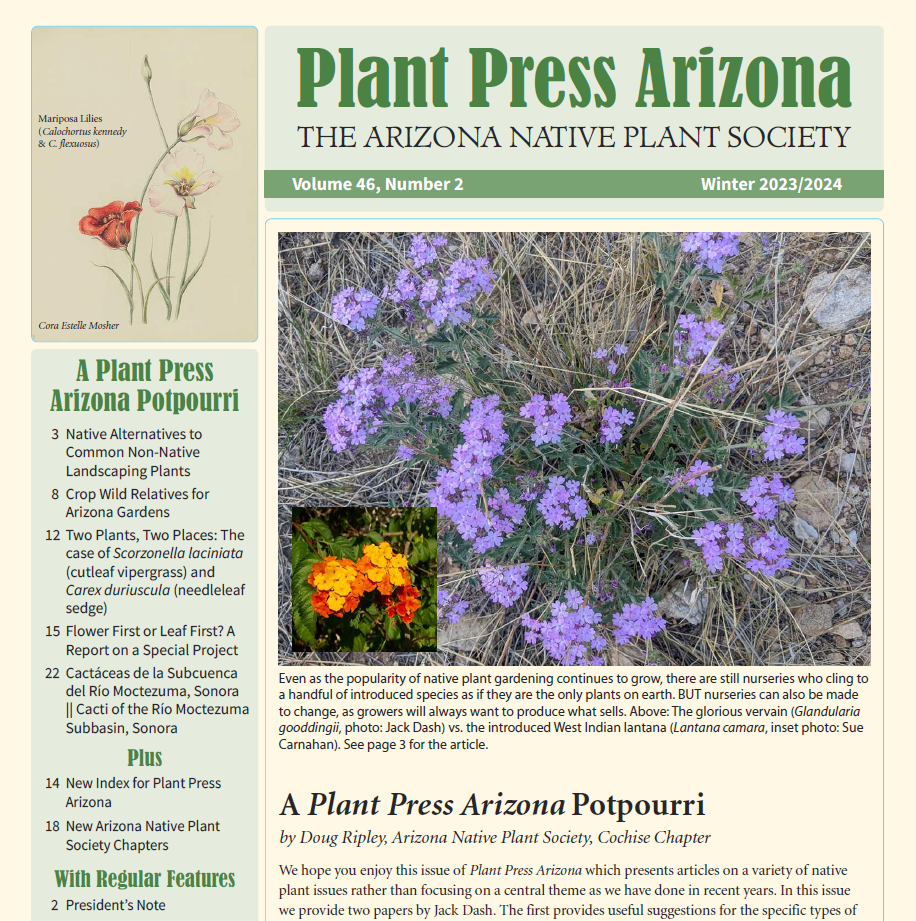
The Spring 2010 edition of PLANT PRESS is now available.
Wildflower Posters in the classrooms! For more information, click here.
Happenings, the Quarterly Newsletter of AZNPS of the Arizona Native Plant Society - June-August 2010 is now available on-line
Happenings Co-Editor Needed. This very useful little publication that you are reading is in search of a new co-editor to assist Sharon Dyer of the Flagstaff Chapter, who has gamely volunteered for half the job. Duties include soliciting chapter and board news, short articles, and photos four times a year, copy editing what you receive, and plopping the result into this template. Happenings is currently in Word; desktop publishing software would make the task easier and the format more consistent. Interested volunteers should contact AZNPS President Barb Phillips at bagphillips@yahoo.com. For the nitty details, contact me: karolynkendrick49@earthlink.net
NEW! Visit a new website, Tucson Urban Wildlife Walk, to encourage planting native habitats for the native animals.
Southern Arizona Nature Almanac
Floristic almanac: This month-to-month guide to some of the main floristic events in southern Arizona is excerpted or summarized, with permission, from Southern Arizona Nature Almanac, by Roseann Beggy Hanson and Jonathan Hanson (University of Arizona Press, 1996). This charming natural history guide is chock-full of insights, observations, stories, and suggestions for outings into the never-ending wonder of the Sonoran Desert. In Tucson, look for the book at the Audubon Nature Shop, Blue Raven Gallery, Tohono Chul Park, or other booksellers.
AUGUST AT A GLANCE
DESERTSCRUB
• Flowers include telegraph plants (Heterotheca subaxillaris), summer poppies (Kallstroemia grandiflora), barrel cactuses (Ferocactus spp.), asters (Machaeranthera spp.), buffalo gourds (Cucurbita foetidissima), devil's claw (Proboscidea spp.), morningglories (Ipomoea spp.), sacred datura (Datura meteloides) and ground cherries (Solanum elaeagnifolium), which will bloom across the desertscrub and up into the grasslands.
• Desert hackberry shrubs (Celtis spinosa) are fruiting; look for Leila hackberry butterflies flitting around the foliage.
• This month and next are the best for butterfly watching, from desertscrub up to coniferous forests. See Flora section this chapter, and Appendix VII. Snouts, monarchs and painted ladies are especially common in most communities.
• Throughout the communities gnats, both benign and biting varieties, chiggers and mosquitos can plague mammalian visitors.
GRASSLANDS
• Trailing four o-clock (Allionia incarnata), wiry lotus (Lotus rigidus), flame-flowers (Talinum aurantiacum and T. pulchellum), dakota verbena (Glandularia bipinnatifida), jatropha (Jatropha macrorhiza) and longpod senna (Senna hirsuta var. glaberrima) will be flowering.
• Variegated and gulf fritillaries are common butterflies this month.
• Lark buntings settle in the grasslands for the coming fall and winter.
OAK WOODLANDS
• Papalotilla (Guardiolia platyphylla), bouvardia (Bouvardia spp.), long-flowered four-o'clock (Mirabilis longiflora) and western spiderwort (Gradescantia occidentalis) present flowers in moist, shady areas.
• Manzanitas (Arctostaphylos pungens) droop with their namesakes—little red "apples" the size of peas, and canyon grapes (Vitus arizonica) are coming ripe.
• Nabokov's satyr butterflies have a flight this month and may be seen through October.
PINE-OAK WOODLANDS
• Flowering plants include columbines (Aquilegia chrysantha), penstemons (Penstemon spp.) and gilias (Ipomopsis spp.).
• Small trees and shrubs are putting out their berries, including birchleaf buckthorns (Rhamnus betulaefolia) and lemonadeberry (Rhus trilobata).
• The bark of ponderosa pines (Pinus ponderosa) smells strongly of butterscotch or vanilla this month (volatile oils in the sap smell most strong in warm weather).
CONIFEROUS FORESTS
• This month is the peak for flowers in the high country: indian paintbrush (Castilleja spp.), mountain thistle (Cirsium pulchellum and C. wheeleri), aspen fleabane (Erigeron macranthus), goldenrod (Solidago spp.), senecio (Senecio spp.), beardlip penstemon (Penstemon barbatus), pinks (Silene spp.), Hooker evening primrose (Oenothera hookeri), cutleaf coneflower (Rudbeckia laciniata) and Richardson's and purple geranium (Geranium richardsonii and G. caespitosum).
• Some odd-looking plants are conspicuous this month, especially along trails or roads, including flannel mullein (Verbascum thapsus) with its fuzzy foliage and wand-like flower stalk; skunk cabbage (Veratrum californicum), which looks like a prehistoric plant with its huge cabbage-like leaves; and green gentian (Swertia radiata), which looks like mullein without the fuzzies.
• Masses of ladybugs (Hippodamia convergens), also called convergent lady beetles, cover rocks and shrubs in the high country, especially in August. They are not breeding or feeding much—they're just "hanging out" (called diapause). Ladybugs descend to the lowlands in early spring to mate and lay eggs.
SPECIAL EVENTS
• August 12, the Perseid Meteor Shower (see below).
IN THE SKY
• August 1 marks the mid-point between Summer Solstice and Autumnal Equinox, traditionally called Lammas. In more temperate climates, Lammas was the beginning of the harvest.
• The Summer Triangle (Vega, Deneb and Altair) is overhead this month.
• High in the northeast, look for the spectacular Perseid Meteor Shower on the 12th around 11 p.m. to midnight if the sky is clear of clouds.
Print August Almanac...
Support AZNPS through workplace giving
AZNPS has recently joined the Environmental Fund for Arizona (EFAZ), a coalition of non-profit organizations working to keep Arizona healthy and maintain our special quality of environment. This organization was founded to provide funding and bring attention to our vital state environmental non-profit organizations through workplace giving.
Is there a charity giving program in your workplace? If not, why not contact EFAZ to begin the process? Just email or call 480.510.5511. Check the website to learn about EFAZ and all the partner organizations.