Plant Press Arizona – Winter 2022/2023
Posted on Feb 28, 2023
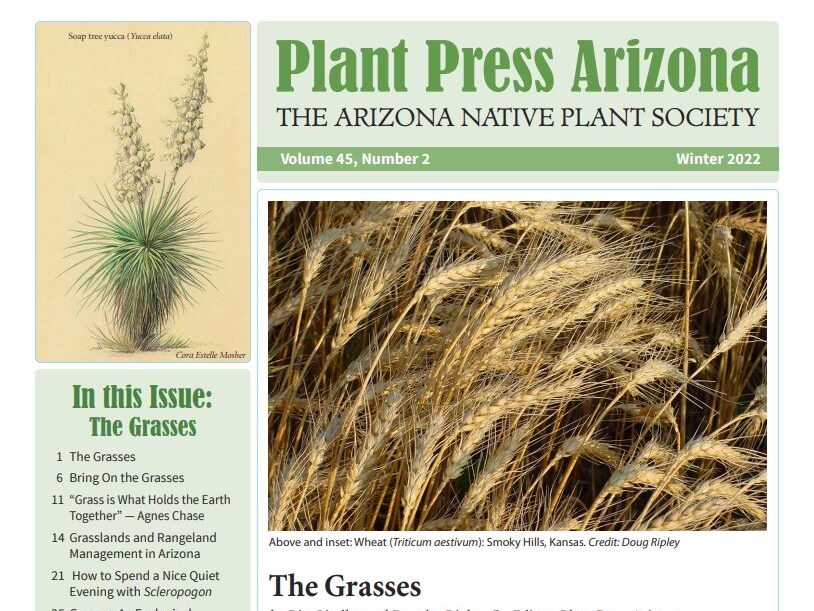
The Winter 2022/2023 edition of Plant Press Arizona is available to view or download for free from our website. Read to learn about the importance of grasses and grasslands!
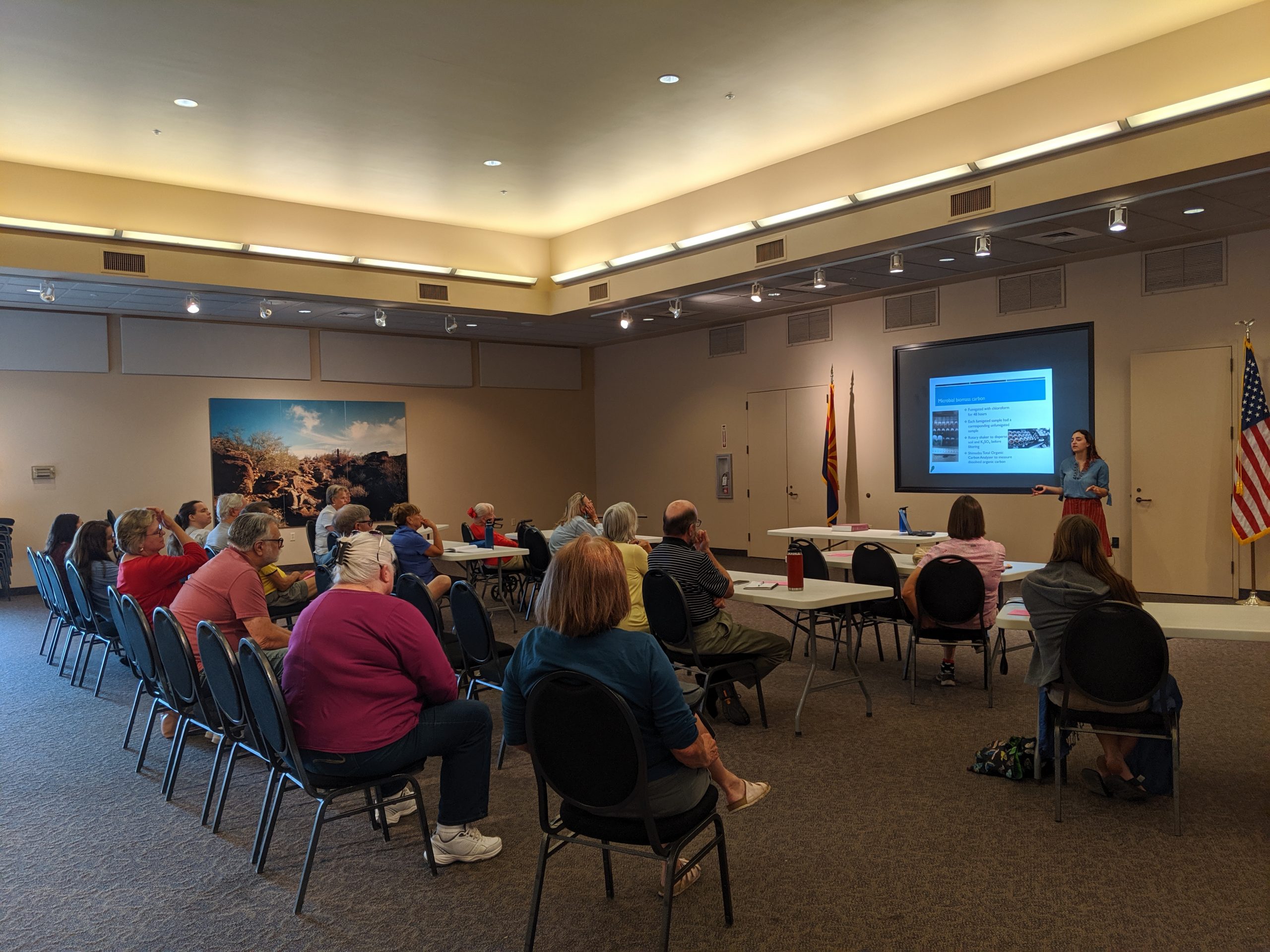
The Phoenix chapter has a monthly virtual meeting on the first Monday of each month at 6:00 PM, we also host events periodically throughout the year. Register for the monthly meeting and add it to your calendar using this link! Our events are announced at least 2 weeks in advance to our email list subscribers, and events will always be listed on the Events Page including how to join them. Our activities are open to chapter members as well as the general public (unless stated otherwise). Please join our general email list to receive notifications about locally hosted events. If you are interested in volunteering at an event, please join our volunteer email list by filling out this form.
View the AZNPS Events Calendar to learn about upcoming events hosted by all Chapters throughout the state. Recordings of many presentations are available to watch on the AZNPS YouTube page.
We have partnered with several other plant and conservation focused groups in the area, and are working on some exciting projects! If you are interested in any of the listed projects, either as a volunteer or just want to get updates on the progress, please reach out to phoenixaznps@gmail.com for more information. Alternatively, you can join our general email list or join our volunteer email list.
 View our Chapter’s Plant List for Metro Phoenix to learn which plants are local to our area. It highlights plants that are: native to the Phoenix metro area, beneficial to wildlife, low-water-use, relatively easy to care for, and generally available at local nurseries or seed suppliers. You can also see the Central Arizona Urban Desert Landscape Guide by CAZCA for more information on growing native plants in central Arizona. The AZNPS Grow Native resources provide additional information about landscaping with native plants, including planning your garden and pamphlets available to download.
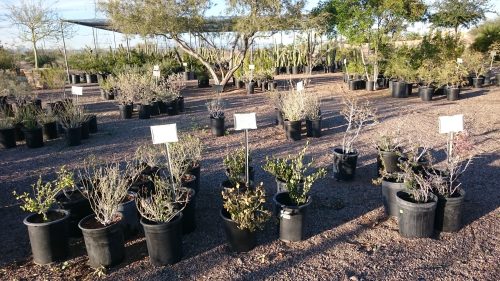
We’ve compiled a list of metro Phoenix nurseries that generally offer a selection of native plants. Some have more variety than others, and inventory changes frequently or may be seasonal. It is best to inquire with a few nurseries by phone or email to determine which one suits your needs.
If you are interested in building a pollinator garden, consider becoming a certified Pollinator Pathway garden! The city of Phoenix also has an initiative for those who are removing grass lawns.
Several local organizations hold desert plant sale fundraisers in the Spring and Fall. We’ll update this announcement if/when additional native plant sales are scheduled in the metro Phoenix area.
Desert Botanical Garden – Spring Plant Sale: October 22 (members) & October 23 – 26 (general public)
Boyce Thompson Arboretum – Spring Plant Sale: October 16 (members) & October 17 – November 1
Center for Native and Urban Wildlife – Spring Plant Sale: October 22 – 23
Butterfly Wonderland: 2026 plant sale has passed
Central Arizona Cactus and Succulent Society Show and Sale: 2026 Show and sale has passed
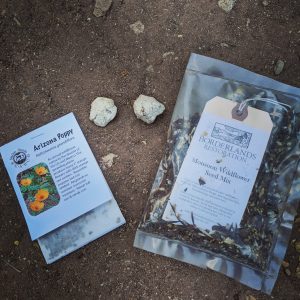
Monsoon season and fall are terrific times to add wildflower seeds to your landscape, assuming it rains! For a wide variety of Arizona native plant seeds, we recommend the following sources:
Maricopa Native Seed Library – The public may obtain up to 3 free seed packets per month. Available at several Maricopa Community Colleges libraries.
Native Seeds / Search – Focus on desert-adapted heirloom varieties of edible vegetables as well as some native plants.
Free Tree Programs – SRP offers 2 free trees to home owners using SRP, they have native tree options (must sign up to seminar which is offered twice a year). APS and the city of Phoenix have grants to offer HOAs / communities free trees.
Desert Botanical Garden – Purchase seeds online or in person at their Garden Shop.
Borderlands Restoration Network – Purchase seeds online or visit their nursery in Patagonia.
Central Arizona Cactus and Succulent Society Seed Depot – The Propagation Education Group (PEG) sells seeds for $1.00 per packet at each of its meetings.
Cactus and Succulent Society of America Seed Depot – Highly specific and well documented collections. Members only benefit.
List of Maricopa Seed Libraries – A resource listing where to find free seeds in Maricopa County and the Phoenix Metro Area. Many are hosted in local libraries and mostly offer vegetable and fruit seeds, though sometimes offer native plant seeds as well. Find the seed library closest to you! Many contain additional information on growing plants and links to local community gardens.
If you feel there’s a local nursery, native plant fundraiser, or seed supplier we should add to our list, please let us know!
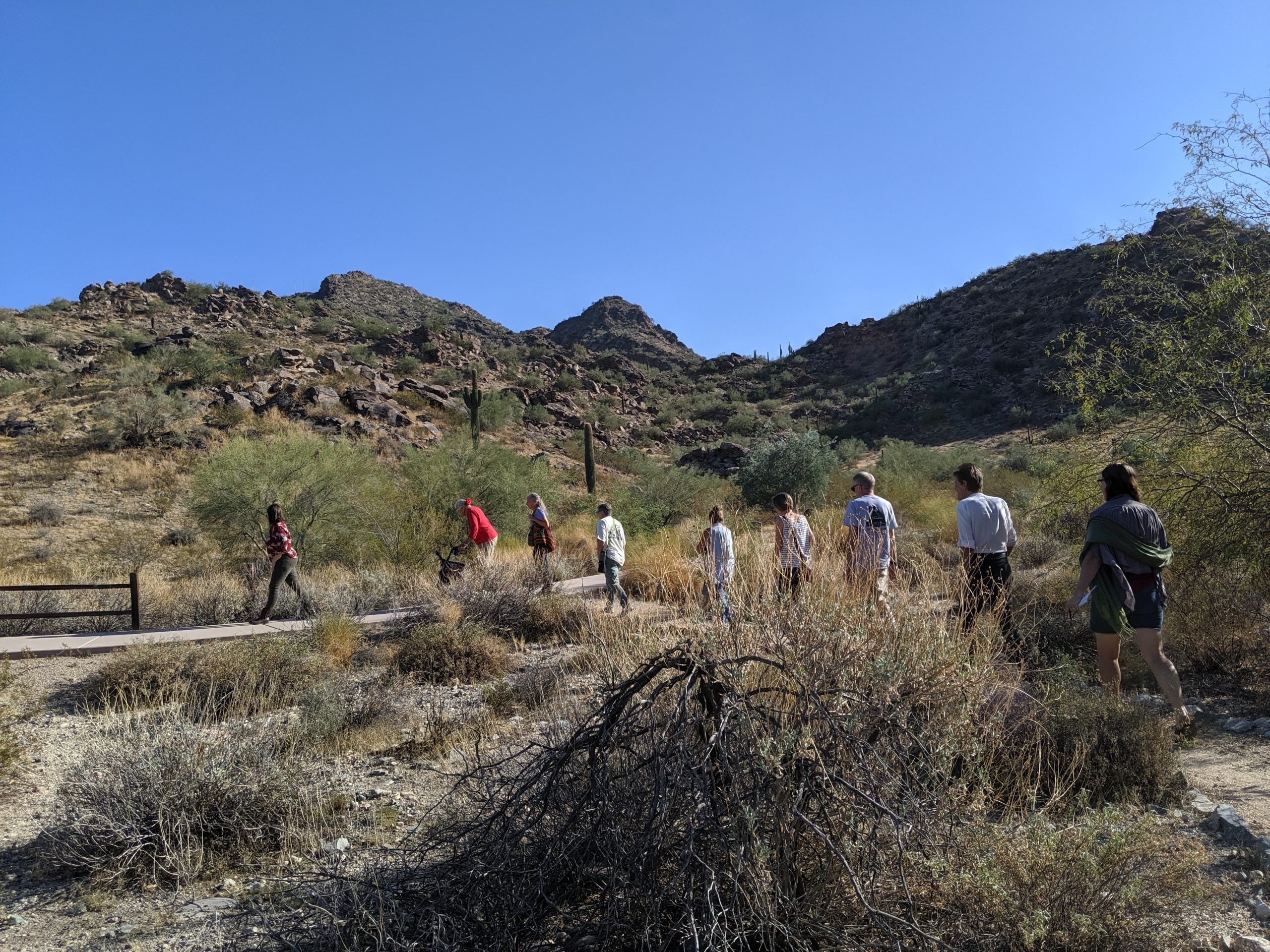
Many local organizations host free or low-cost seasonal nature walks, interpretive hikes, gardening classes, and educational activities with a focus on native plants & habitats. Learn more by clicking on the links below.
To stay up to date on our meetings and other activities, please join our email list or sign up for our volunteer email list to hear about volunteer opportunities. Follow the AZNPS Phoenix Chapter’s Facebook page for more information about local native plants news, research, and events! We also invite you to follow our Chapter on Instagram and use the hashtag #aznativeplants to help us raise awareness of Arizona’s amazing native plants!
If you want to be more involved in the community and event planning, we invite you to join our discord!
| Name | Role | Contact |
| Daniela Howe | President | phoenixaznps@gmail.com |
| Peter Pawliuk | Vice President | phoenixaznps@gmail.com |
| Kathleen McCoy | Secretary | phoenixaznps@gmail.com |
| Kevin Brown | Treasurer | phoenixaznps@gmail.com |
| Carly Mendoza | Social Media | phoenixaznps@gmail.com |
Want to get involved? We've got just the thing!
If you are interested in volunteer activities related to restoration, invasive species control, gardening, conservation, or scientific research, we recommend contacting the following organizations.
These are citizen science and community science projects you can participate in on your own at home, during a walk in your neighborhood, or while visiting Arizona’s public lands.
Contribute photos and information about your wildlife sightings to have them identified by other iNaturalist users. “Research grade” observations also contribute to scientific research.
Help the Desert Botanical Garden document saguaro cactus in the urban areas of metro Phoenix and take notes on their overall health. You may also submit reports of dead saguaros.
Desert Refuge – Monarchs and Milkweeds in Arizona
Document the presence of monarchs and the seasonal changes of milkweed at a location of your choosing.
Document the seasonal changes in plants or animals near your home by becoming a USA – National Phenology Network observer.
Observe plants as part of this national program to help scientist understand how plants are responding to long-term changes in climate. Or, join their Milkweeds and Monarchs project which is studying whether monarch butterflies prefer to lay eggs on non-flowering milkweed plants.
Libraries as Hubs for Citizen Science
Visit a participating library that loans out citizen science tools and supplies.
Contribute invasive buffelgrass observations to the USA – National Phenology Network’s Buffelgrass Green-Up phenophase map.
Monarchs need milkweed and nectar plants, so hopefully you have these growing in your yard or neighborhood! Join this monarch “tagging” project to help document Western monarch migration.
A special initiative in metro Phoenix to identify and map invasive plants. There is also a special project dedicated to locating stinknet (Oncosiphon piluliferum/pilulifer).
While visiting National Forests and other wild lands, keep an eye out for invasive plants.
Help RiversEdge West track the spread of tamarisk beetles (Diorhabda spp.) across the western United States and Mexico. Data is used for an annual distribution map that notes presence and absence of tamarisk beetles.
Western Monarch Milkweed Mapper
If you see milkweed plants or monarch butterflies, eggs, or caterpillars while outdoors, take a photo and submit your sighting to this regional project.
Participate in their Land Cover project to help scientists create better maps. Or, join the Trees project by taking height and circumference measurements.
Native plants attract a variety of birds. Report the type of birds you see in your yard, neighborhood, or local park.
Native flowering plants are essential for bumble bees. Help scientists track their populations by submitting photos of the ones you see.
If you have a rain gauge at home (or decide to purchase one), join this Arizona rainfall monitoring network to submit your daily rainfall totals.
Select from a variety of online projects to contribute to real academic research from your own computer.
Access digitized natural history data online to help transcribe and decipher field notebooks, photographs, museum labels, and data sheets from around the world.
Posted on Feb 28, 2023
The Winter 2022/2023 edition of Plant Press Arizona is available to view or download for free from our website. Read to learn about the importance of grasses and grasslands!
Posted on Nov 08, 2022
The Maricopa Pollinator Pathway is a new initiative of the Maricopa Native Seed Library which helps to build interconnected pollinator habitat. The Pathway also offers a free pollinator habitat certification program for Maricopa County and other low & intermediate desert areas of Arizona (under 3000 feet elevation).
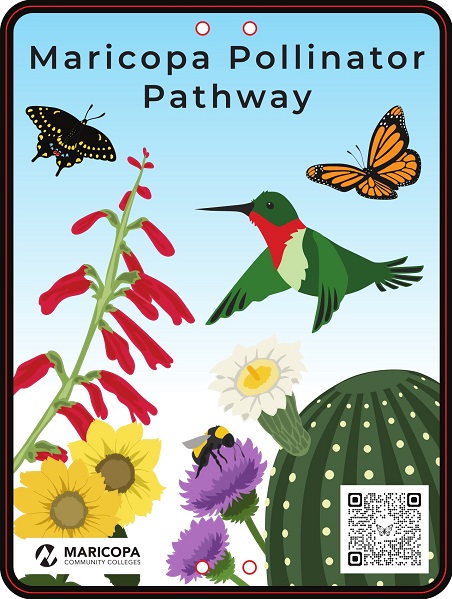
Danielle Carlock, the seed library’s founder, recently gave a presentation about the Maricopa Pollinator Pathway to the Phoenix Chapter. The presentation recording is available on the Arizona Native Plant Society’s YouTube channel. Watch to learn how to create pollinator habitat in your outdoor space using native plants. Then, certify your habitat with the Maricopa Pollinator Pathway!
The Phoenix Chapter assisted in the development of the habitat certification criteria. So, we are excited to help promote the Maricopa Pollinator Pathway and increase the number of pollinator-friendly gardens in Arizona. We encourage you to spread word about the program to your family, friends, and neighbors!
Posted on Nov 01, 2022
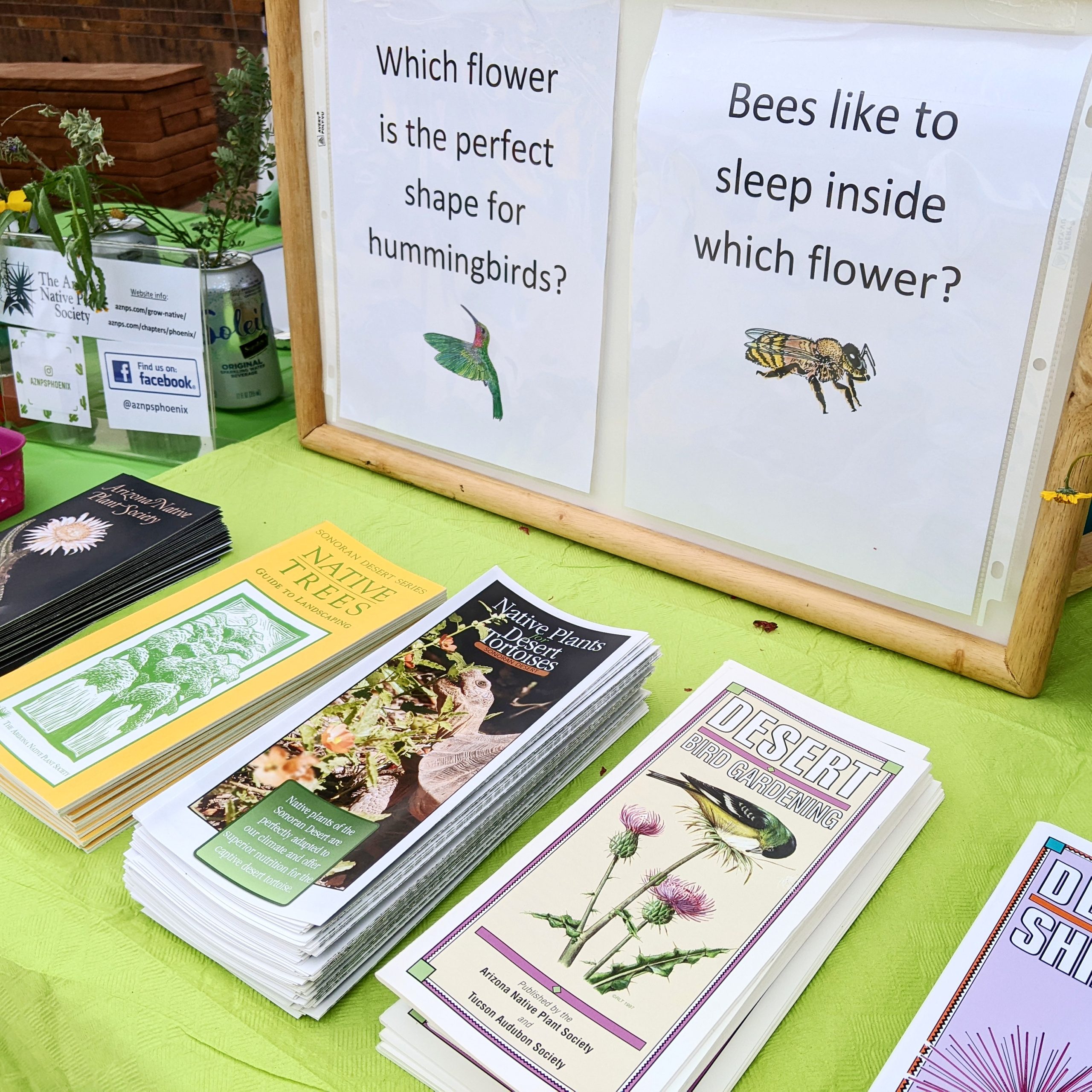
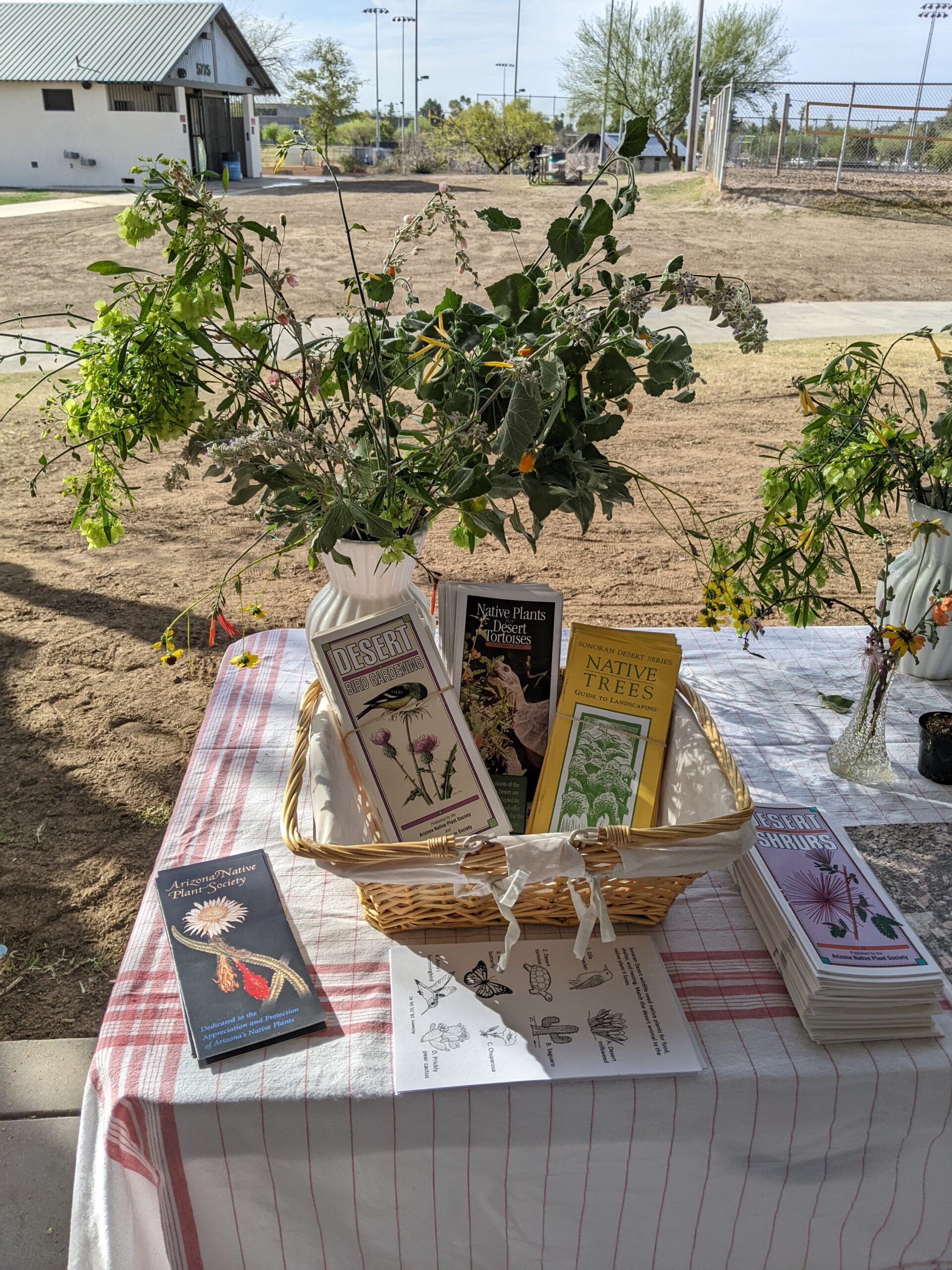
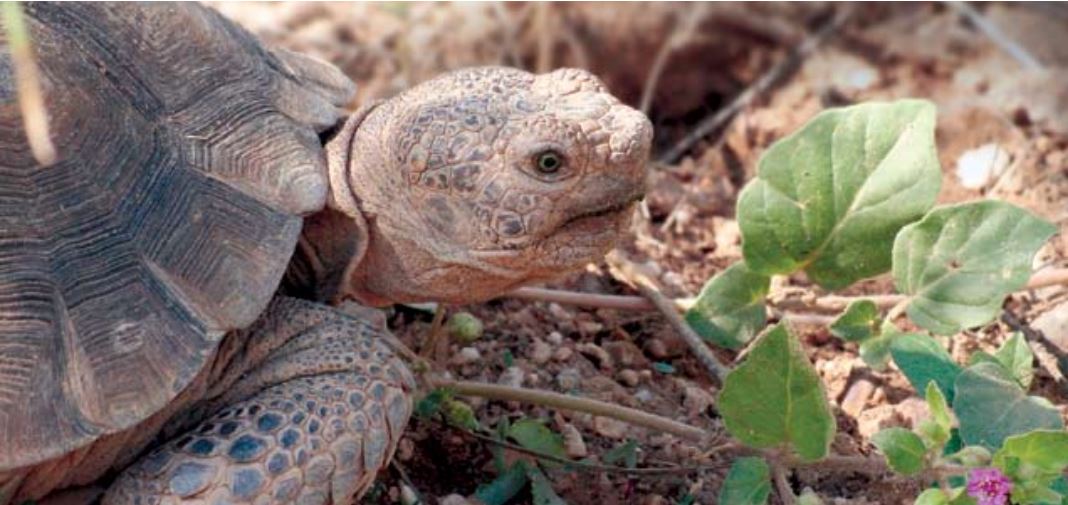
The Phoenix Chapter collaborated with the Arizona Game and Fish Department to update the Native Plants for Desert Tortoises pamphlet. The native plants listed provide captive desert tortoises a nutritious diet. (These plants are also great choices for landscaping, even if you don’t have a tortoise!)
Arizona’s desert tortoise adoption program is open to all Arizona residents. Native Plants for Desert Tortoises provides tips on creating and maintaining a tortoise habitat, which is required to adopt a tortoise.
Desert tortoise adoption was the topic of a recent Phoenix Chapter meeting, where Kellie Tharpe of the Arizona Game and Fish Department gave a feature presentation. The recording is available to watch any time on the AZNPS YouTube Channel.
Information about the desert tortoise adoption program is also available on the Arizona Game and Fish Department website.
See what your chapter has been up to!