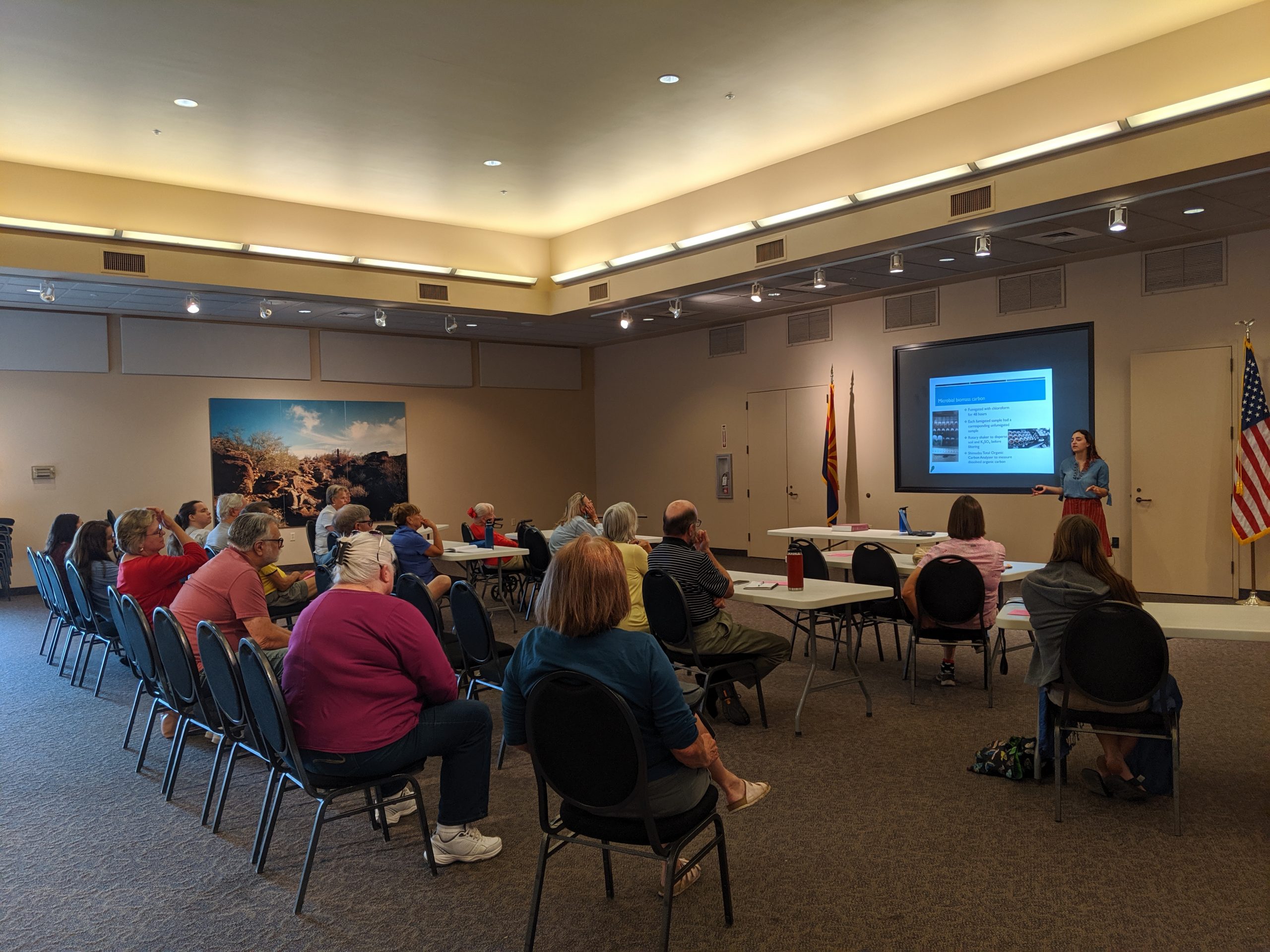
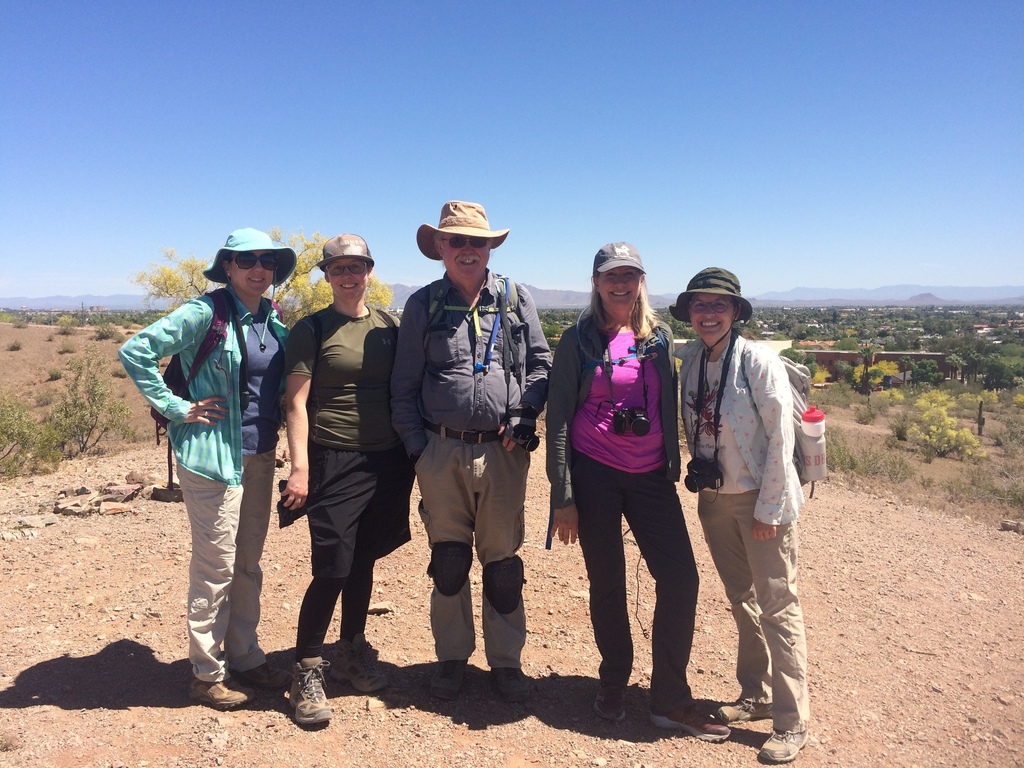
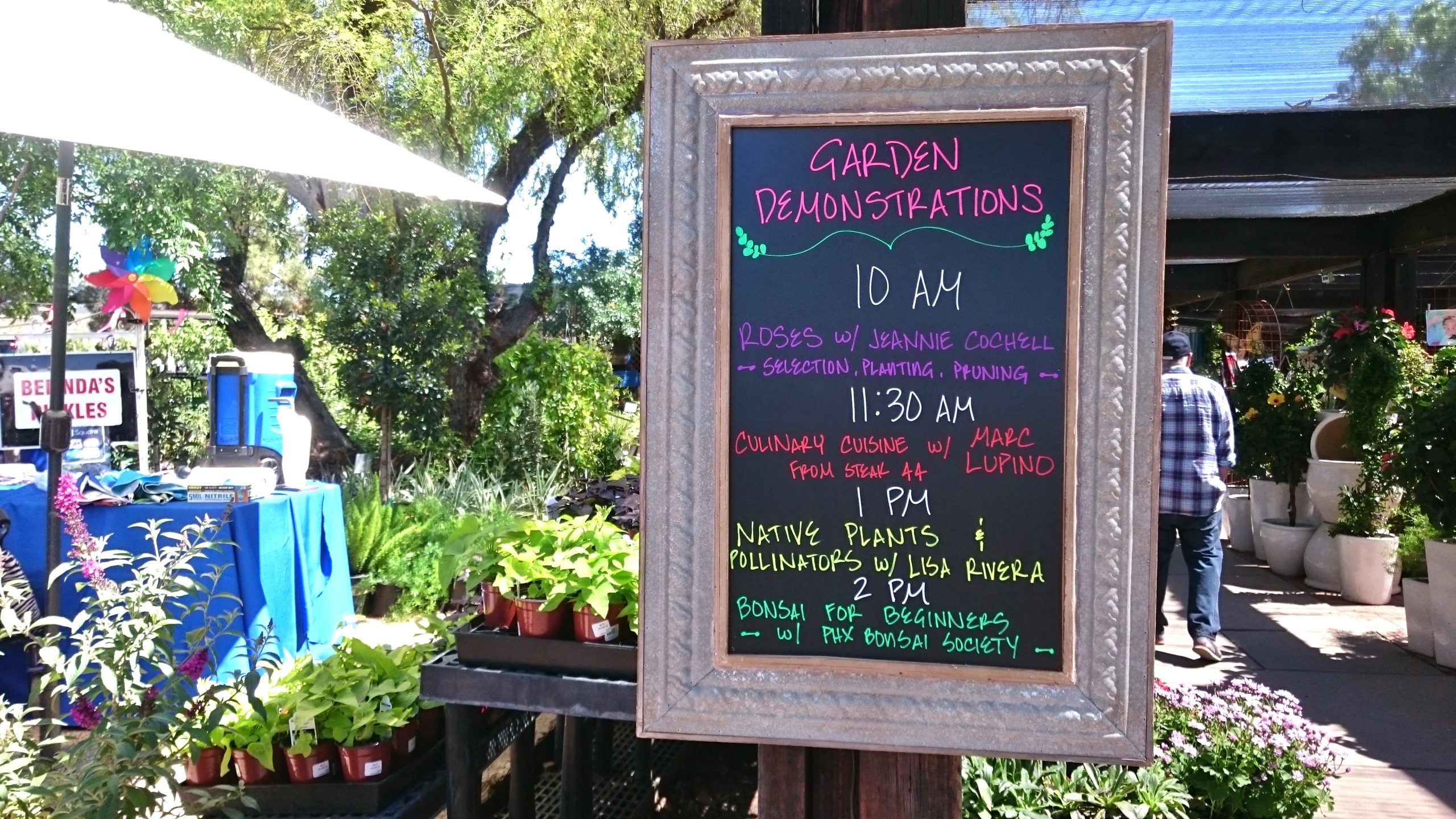
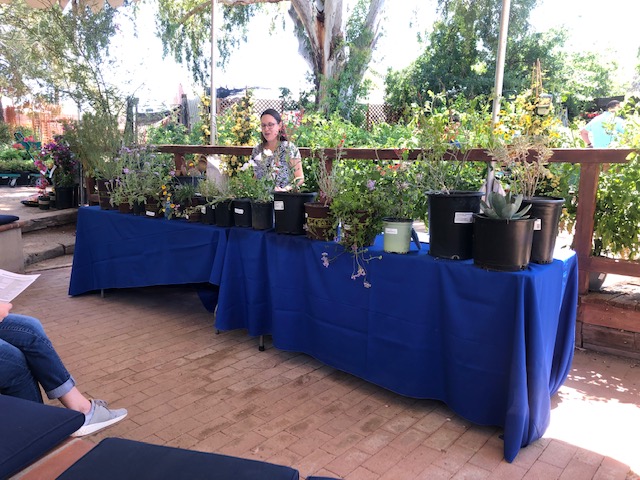
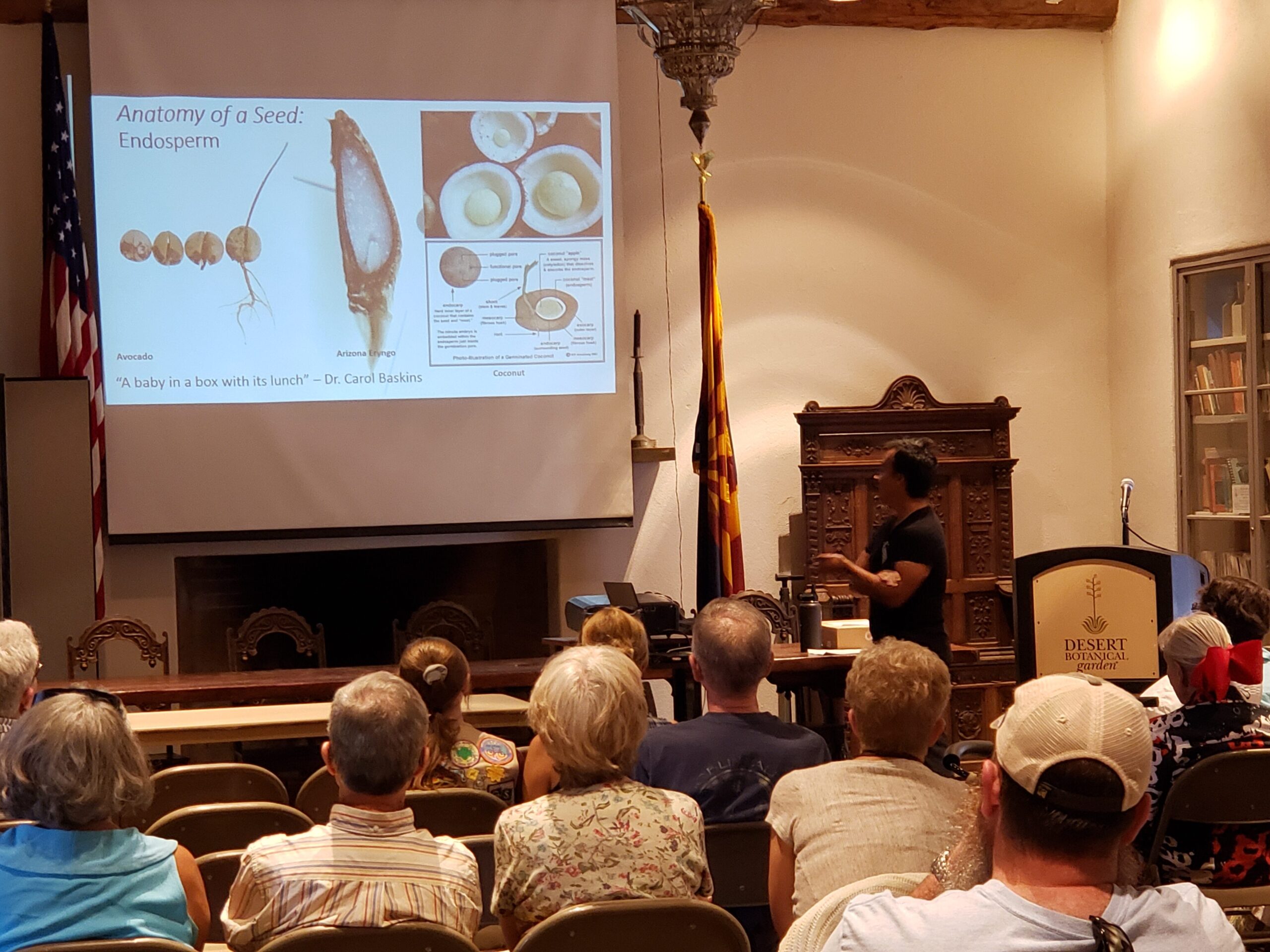
The Phoenix chapter has a monthly virtual meeting on the first Monday of each month at 6:00 PM, we also host events periodically throughout the year. Register for the monthly meeting and add it to your calendar using this link! Our events are announced at least 2 weeks in advance to our email list subscribers, and events will always be listed on the Events Page including how to join them. Our activities are open to chapter members as well as the general public (unless stated otherwise). Please join our general email list to receive notifications about locally hosted events. If you are interested in volunteering at an event, please join our volunteer email list by filling out this form.
View the AZNPS Events Calendar to learn about upcoming events hosted by all Chapters throughout the state. Recordings of many presentations are available to watch on the AZNPS YouTube page.
Current and Ongoing Projects
We have partnered with several other plant and conservation focused groups in the area, and are working on some exciting projects! If you are interested in any of the listed projects, either as a volunteer or just want to get updates on the progress, please reach out to phoenixaznps@gmail.com for more information. Alternatively, you can join our general email list or join our volunteer email list.
Maricopa Native Seed Library: Collecting native seeds, building seed packets and distributing native seed packets via the native seed library. We have taken over restocking responsibilities for the South Mountain Community Library while it’s founder Danielle Carlock is out of the country on a Fulbright scholarship. We meet every Wednesday at 12PM to restock.
Center for Native and Urban Wildlife: Developing a grow from home program where volunteers can grow native plants to be used for restoration projects in central Arizona.
Desert Botanical Garden and the Central Arizona Conservation Alliance: Building a flora of Papago Park as part of The Plant Atlas Project of Arizona. The Desert Botanical Garden will host courses to train interested parties in November. Registration is now open!
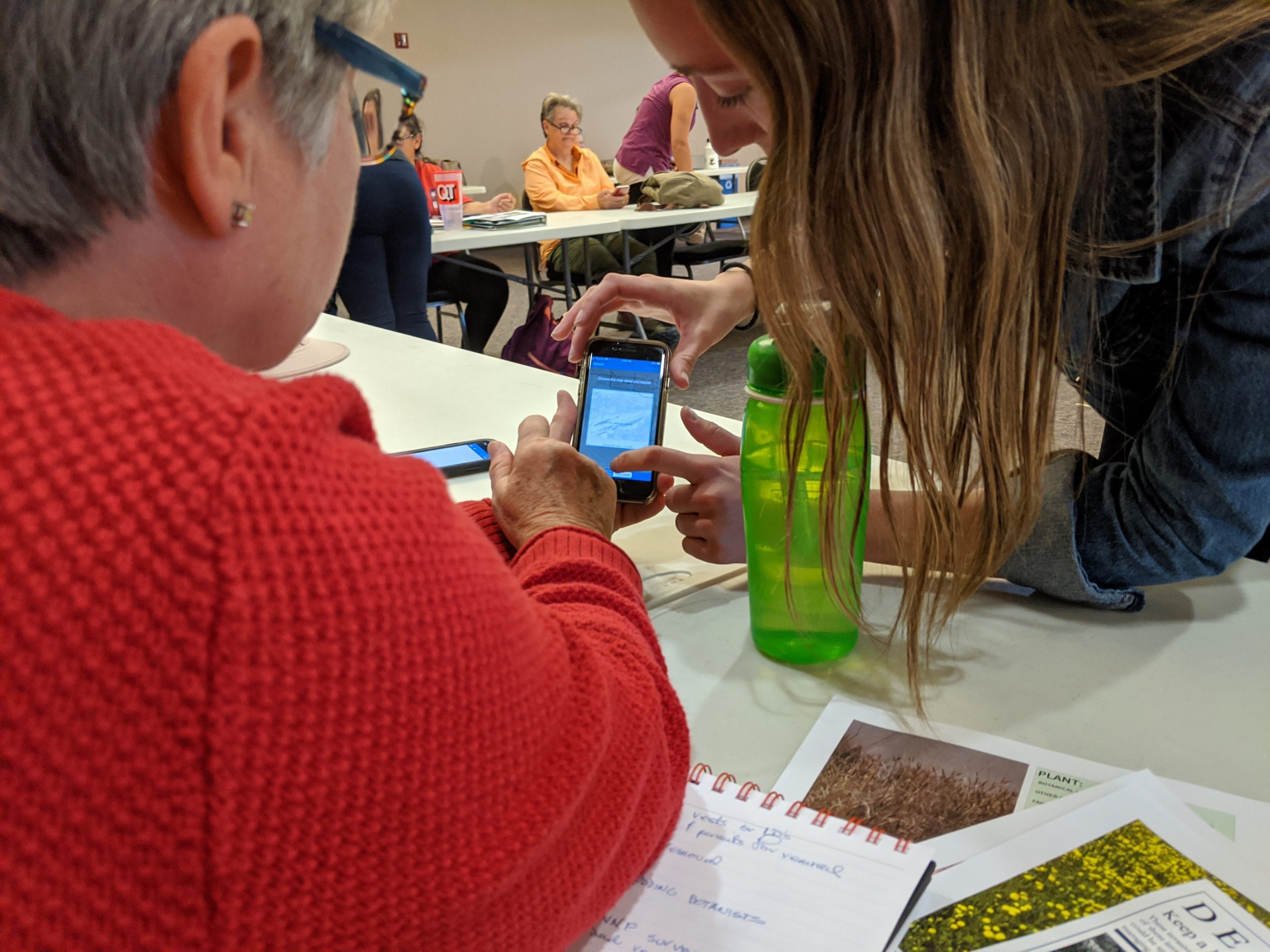
iNaturalist: We have an ongoing iNaturalist project to map plants on Shadow Mountain. This is used as a training ground to learn how to make research grade observations in iNaturalist and how to identify plants in the field. If you are interested in starting a project for a different park or preserve in the Phoenix metro area, please reach out to phoenixaznps@gmail.com
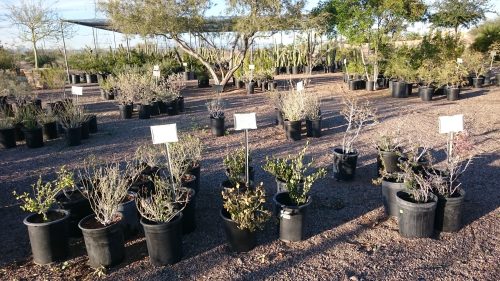
Seeking native plants to use in landscaping?
View our Chapter’s Plant List for Metro Phoenix to learn which plants are local to our area. It highlights plants that are: native to the Phoenix metro area, beneficial to wildlife, low-water-use, relatively easy to care for, and generally available at local nurseries or seed suppliers. You can also see the Central Arizona Urban Desert Landscape Guide by CAZCA for more information on growing native plants in central Arizona. The AZNPS Grow Native resources provide additional information about landscaping with native plants, including planning your garden and pamphlets available to download.
We’ve compiled a list of metro Phoenix nurseries that generally offer a selection of native plants. Some have more variety than others, and inventory changes frequently or may be seasonal. It is best to inquire with a few nurseries by phone or email to determine which one suits your needs.
Several local organizations hold desert plant sale fundraisers in the Spring and Fall. We’ll update this announcement if/when additional native plant sales are scheduled in the metro Phoenix area.
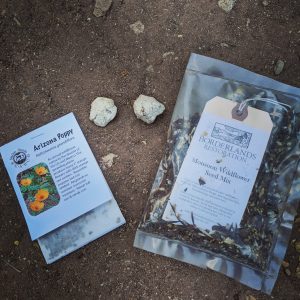
Monsoon season and fall are terrific times to add wildflower seeds to your landscape, assuming it rains! For a wide variety of Arizona native plant seeds, we recommend the following sources:
Maricopa Native Seed Library – The public may obtain up to 3 free seed packets per month. Available at several Maricopa Community Colleges libraries.
Native Seeds / Search – Focus on desert-adapted heirloom varieties of edible vegetables as well as some native plants.
Free Tree Programs – SRP offers 2 free trees to home owners using SRP, they have native tree options (must sign up to seminar which is offered twice a year). APS and the city of Phoenix have grants to offer HOAs / communities free trees.
List of Maricopa Seed Libraries – A resource listing where to find free seeds in Maricopa County and the Phoenix Metro Area. Many are hosted in local libraries and mostly offer vegetable and fruit seeds, though sometimes offer native plant seeds as well. Find the seed library closest to you! Many contain additional information on growing plants and links to local community gardens.
If you feel there’s a local nursery, native plant fundraiser, or seed supplier we should add to our list, please let us know!
Local nature walks and educational events
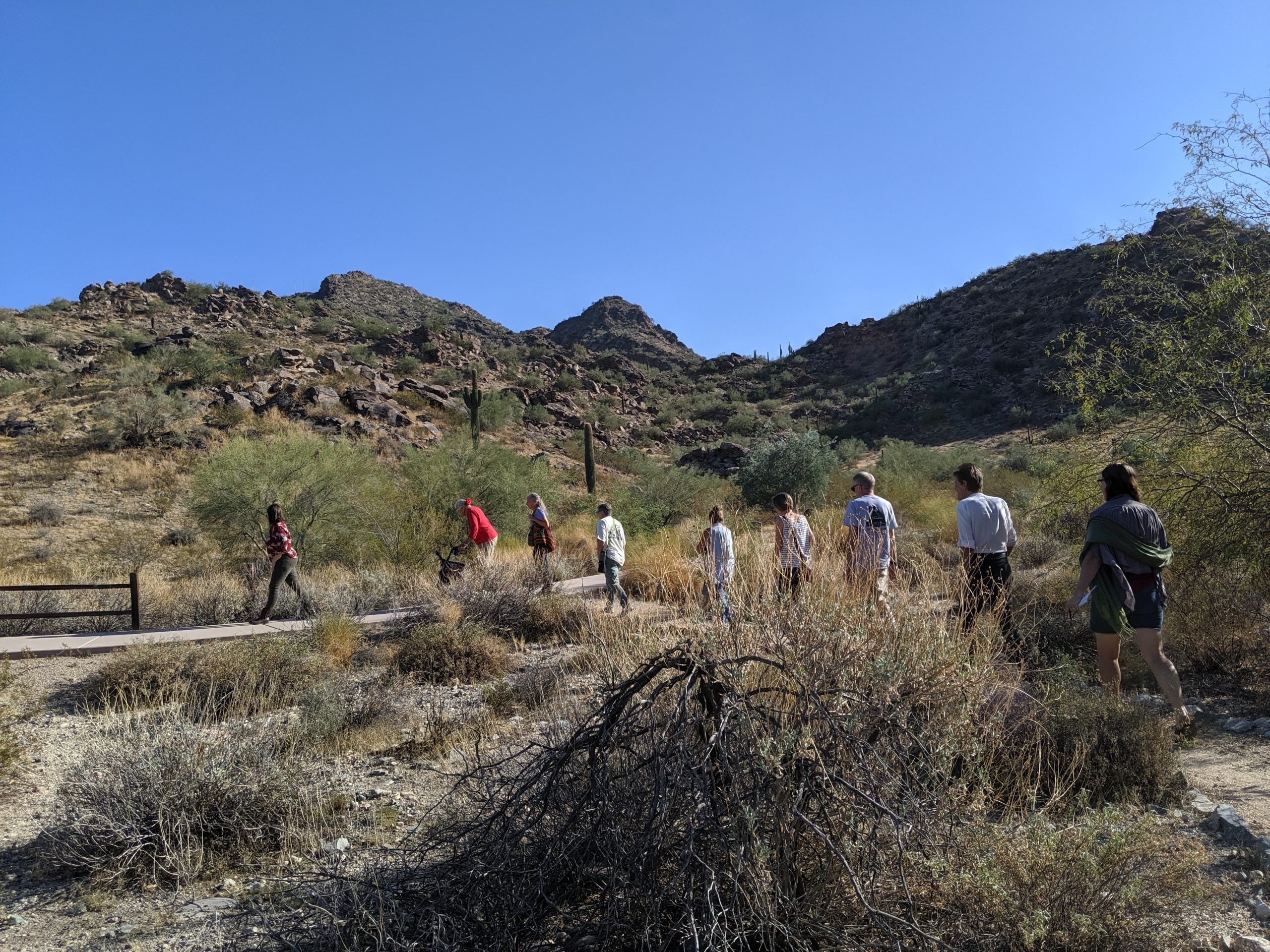
Many local organizations host free or low-cost seasonal nature walks, interpretive hikes, gardening classes, and educational activities with a focus on native plants & habitats. Learn more by clicking on the links below.
To stay up to date on our meetings and other activities, please join our email listor sign up for our volunteer email listto hear about volunteer opportunities. Follow the AZNPS Phoenix Chapter’s Facebook page for more information about local native plants news, research, and events! We also invite you to follow our Chapter on Instagram and use the hashtag #aznativeplants to help us raise awareness of Arizona’s amazing native plants!
If you want to be more involved in the community and event planning, we invite you to join our discord!
Chapter Leadership
Name
Role
Contact
Daniela Howe
President
phoenixaznps@gmail.com
Peter Pawliuk
Vice President
phoenixaznps@gmail.com
Kathleen McCoy
Secretary
phoenixaznps@gmail.com
Kevin Brown
Treasurer
phoenixaznps@gmail.com
Carly Mendoza
Social Media
phoenixaznps@gmail.com
Volunteering Opportunities
Want to get involved? We've got just the thing!
Conservation Volunteer Opportunities
If you are interested in volunteer activities related to restoration, invasive species control, gardening, conservation, or scientific research, we recommend contacting the following organizations.
These are citizen science and community science projects you can participate in on your own at home, during a walk in your neighborhood, or while visiting Arizona’s public lands.
Contribute photos and information about your wildlife sightings to have them identified by other iNaturalist users. “Research grade” observations also contribute to scientific research.
Observe plants as part of this national program to help scientist understand how plants are responding to long-term changes in climate. Or, join their Milkweeds and Monarchs project which is studying whether monarch butterflies prefer to lay eggs on non-flowering milkweed plants.
Monarchs need milkweed and nectar plants, so hopefully you have these growing in your yard or neighborhood! Join this monarch “tagging” project to help document Western monarch migration.
Help RiversEdge West track the spread of tamarisk beetles (Diorhabda spp.) across the western United States and Mexico. Data is used for an annual distribution map that notes presence and absence of tamarisk beetles.
If you see milkweed plants or monarch butterflies, eggs, or caterpillars while outdoors, take a photo and submit your sighting to this regional project.
Participate in their Land Cover project to help scientists create better maps. Or, join the Trees project by taking height and circumference measurements.
Access digitized natural history data online to help transcribe and decipher field notebooks, photographs, museum labels, and data sheets from around the world.
Chapter News
Plant Profile: Sacred Datura
Posted on May 09, 2021
What’s in a Name?
By Kathleen M. McCoy, Master Naturalist, AZNPS Phoenix Chapter Member
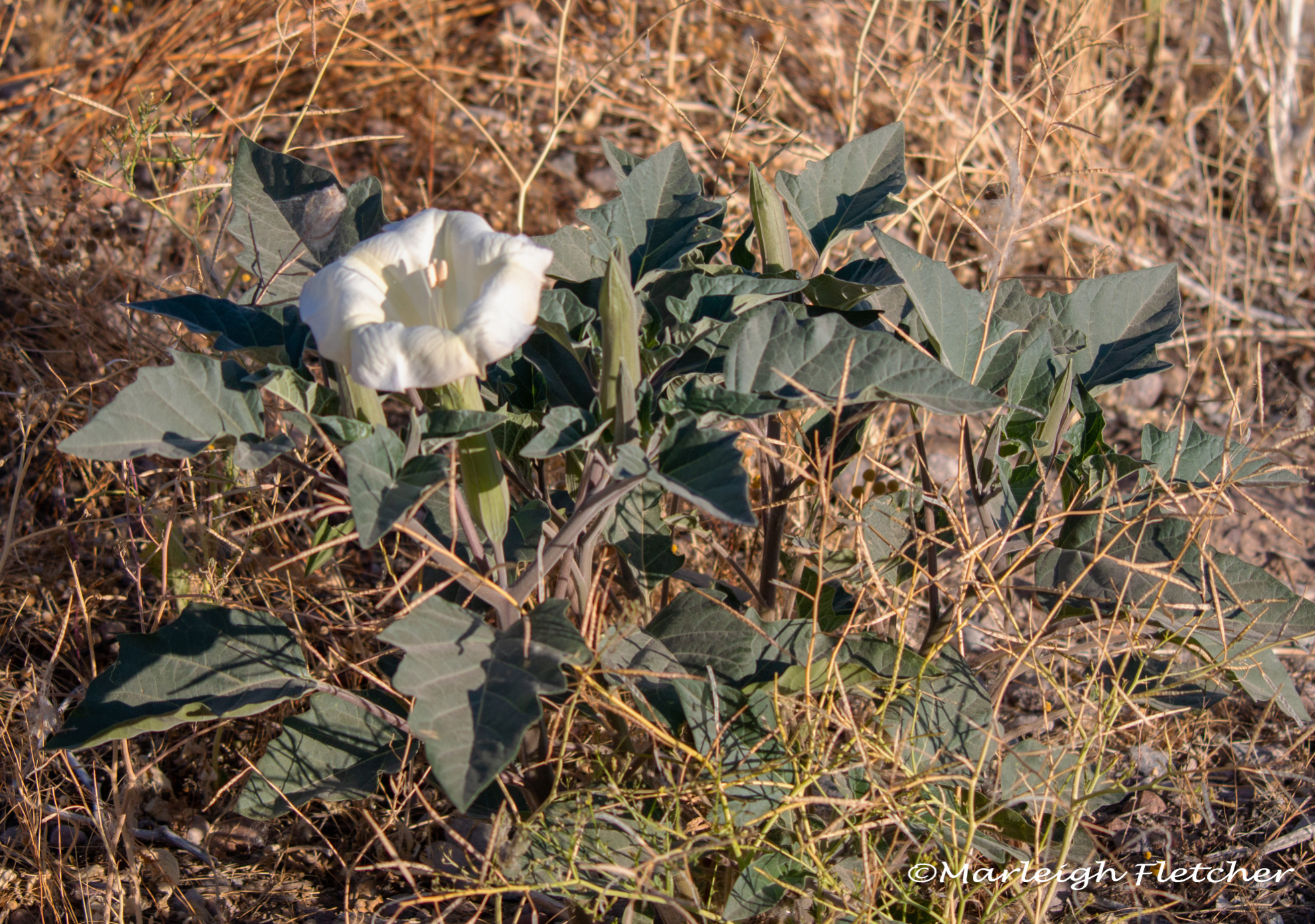
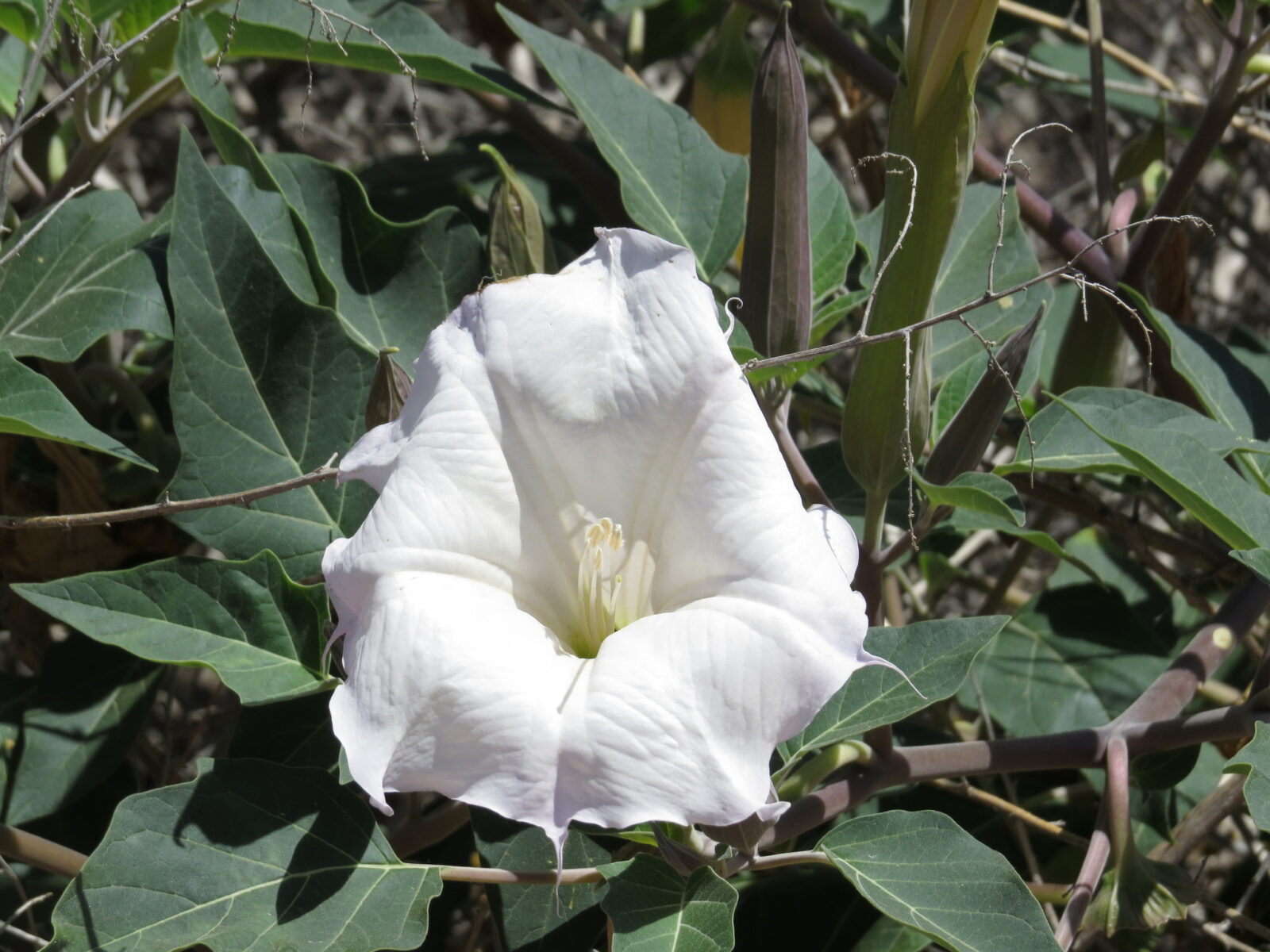
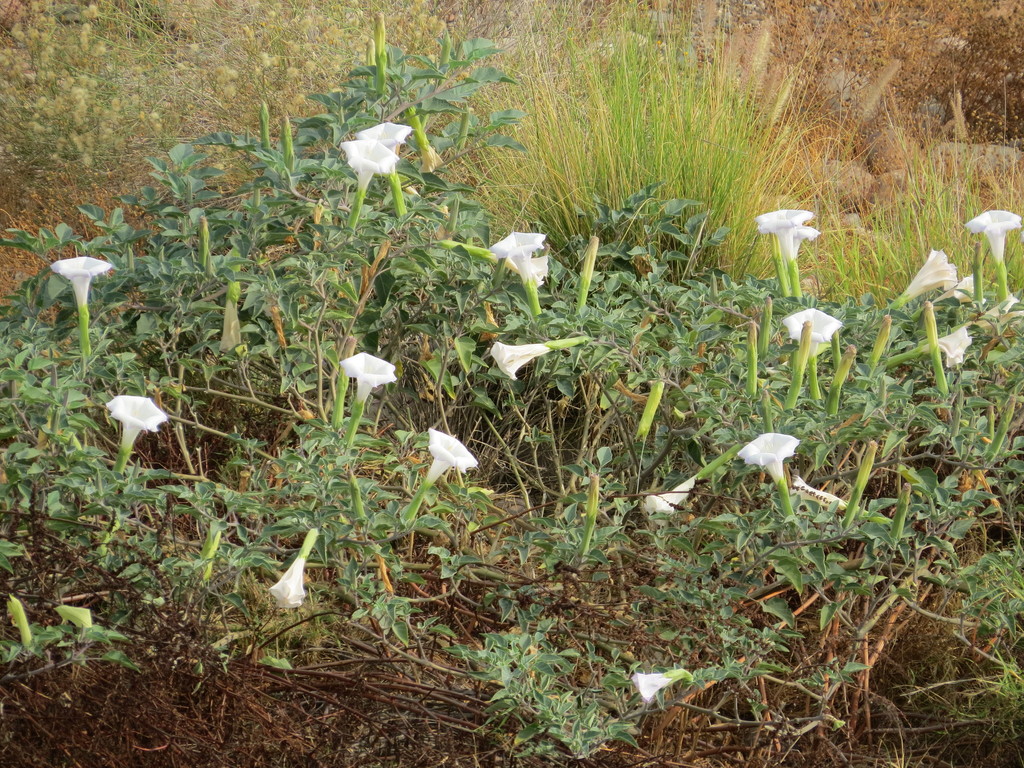
Popular literature often uses the term “Datura” for the 9-12 species in this genus interchangeably even though they are not the same plant. Datura occur widely throughout the temperate and warmer parts of both the Old and New World. In the Southwest, our local species, Datura wrightii (syn Datura meteloides), is colloquially termed Sacred datura or Sacred thorn apple.
Photo credit: Marleigh Fletcher
Datura species can vary from the perennial Sacred datura, which can grow up to 3-5 feet tall and several feet wide, to the much smaller annual Moon flower (D. discolor), measuring just 18-24 inches tall. Sacred datura can be found worldwide but qualifies as native in Arizona due to its historical presence and ability to support local fauna. For example, Brown hornworm (Manduca sexta) caterpillars devour the flowers and leaves and the moths use the underside of the leaves for laying their eggs. This plant is found across Arizona between 1,000-7,000 feet elevation and typically grows in disturbed areas, often along roadsides.
Sacred datura flower and leaves. Photo credit: Lisa Rivera
Likely to catch your eye are its pretty, lily-like trumpet-shaped white flowers, which can reach up to 6 inches long and 3 inches wide. The fragrance of Sacred datura flowers is sweet, as opposed to the foul odor of its sticky, fuzzy dark green leaves when crushed. Variations in leaf and flower colors or sizes result from different growing, lighting, and moisture conditions.
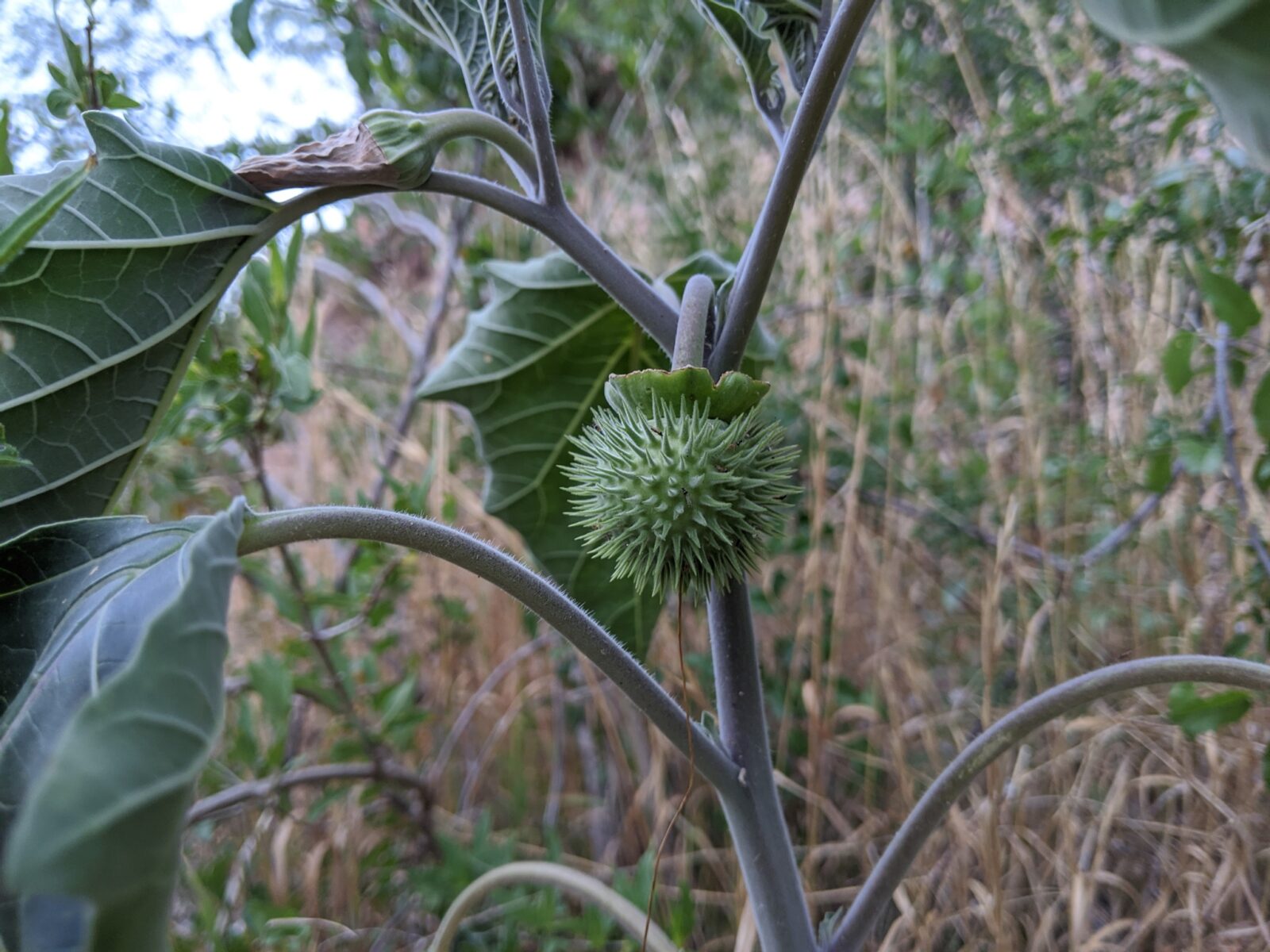
The flowers produce a small round melon-like fruit covered with spikes which has inspired another common name, “thorn apple.” When dry, the fruit pod pops open to disperse the seeds which sprout easily, fresh or dried, and grow vigorously requiring little to no water. Although excessive cold can cause foliage to die back, the plant’s large tuberous roots will be ready to provide new growth once conditions are more favorable.
Sacred datura fruit. Photo credit: Lisa Rivera
Sacred datura, a member of the potato (Solanaceae) family, is also called deadly nightshade for good reason. All parts of the plant, especially the seeds, contain dangerous levels of anticholinergic tropane alkaloids. However, concentrations of active chemicals vary widely in different parts of the plant.
When ingested by animals, including humans, it can be fatal. Toxic elements affect the autonomic nervous system and can result in blindness, lethargy, sweating, and dry mouth. Survivors typically have significant damage to lungs, stomach, intestines, kidneys, and/or heart which may be coupled with mental impairment.
Even though this plant is the most poisonous narcotic known, archeological evidence shows that Sacred datura has been used by humans in the Southwest for at least 3,000 years. In lesser doses, it is a hallucinogen used to boost sensory perceptions, thought processes, and energy levels. All species of Datura have been revered as sacred visionary plants by Shamans and many cultures worldwide.
For those of you who do not know me, I have had a whorl wind tour over the past ten years, moving from homes in the Washington, DC suburb of Fairfax to a farm in rural Orange County, VA, then to San Antonio, TX, and finally here to Phoenix. Throughout these moves, I have found both human and natural friendship in the form of creating pollinator gardens.
I’ve made a million garden mistakes along the way. I still don’t know what I was thinking when I planted Passion vine (Passiflora incarnata) beside my she shed in rural Virginia. Let’s just say ‘exceeds expectations’ is a polite way to say how much that plant grew. The happy side of that accident was the number of Gulf fritillary butterflies I had hanging around the place.
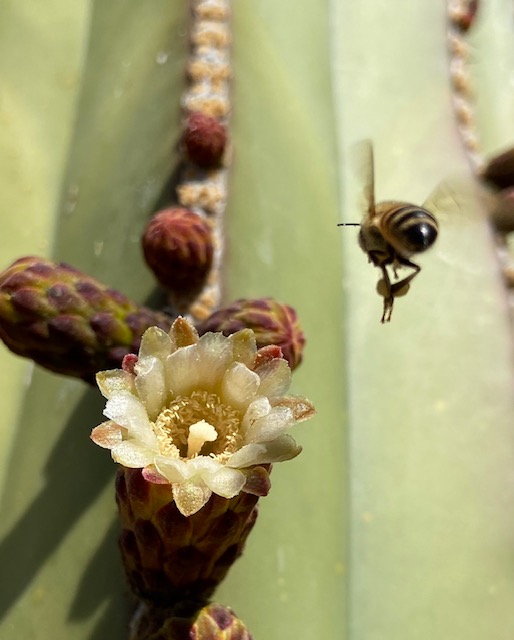
Honey bee zooming in on Mexican fence post cactus (Lophocereus marginatus).
But the more butterflies my garden plants attracted, the more I needed to learn about pollinators in general. I began wondering about the bees I was seeing and marveling at the flies and beetles on my plants. The more plants I installed, the more I would see creatures I’d never paid any mind. So began my descent into symbiotic relationships within plant communities and my questions exploded exponentially.
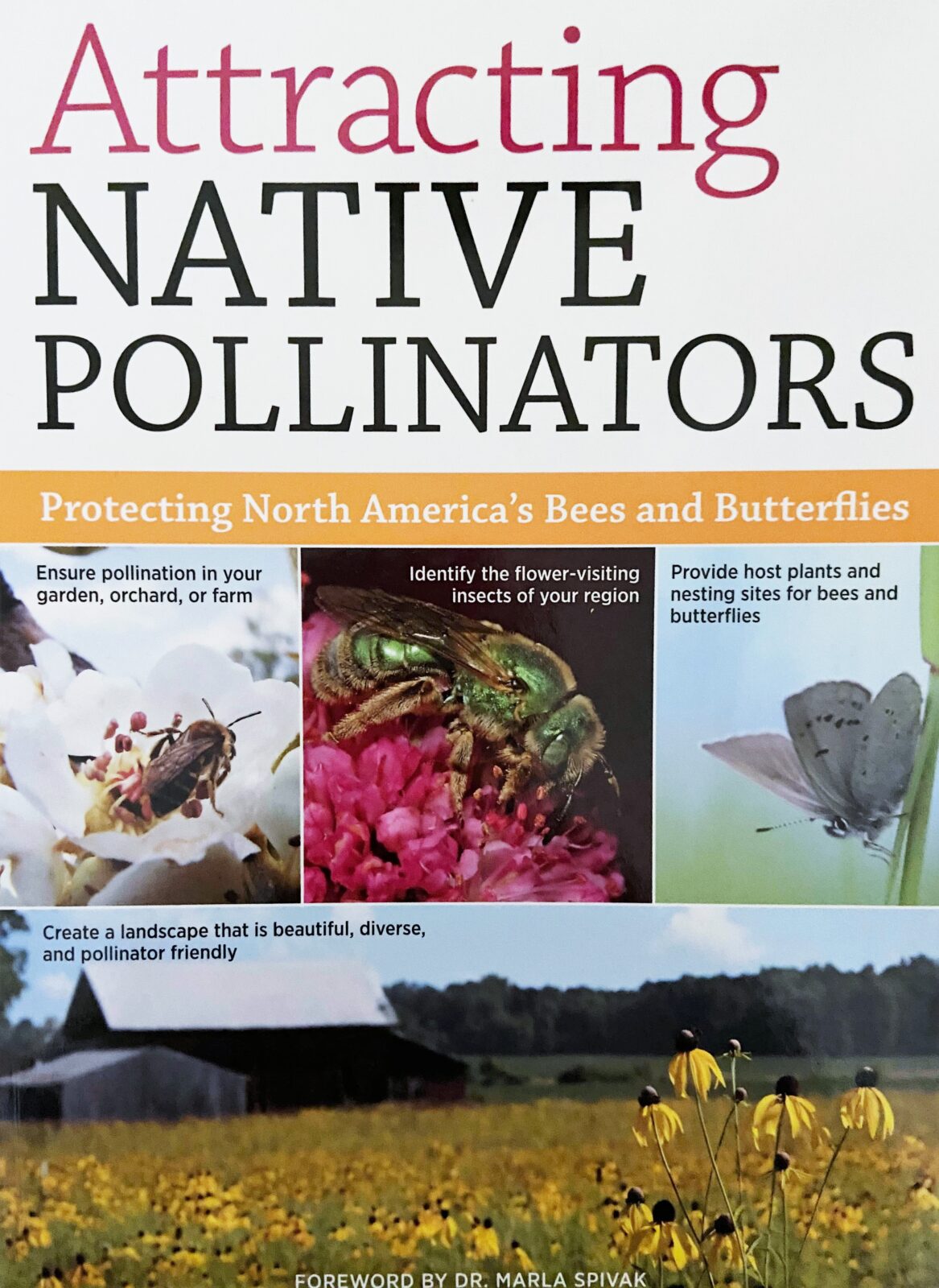
Fortunately, I found this wonderful book, Attracting Native Pollinators. It is written by The Xerces Society, an environmental organization dedicated to research and support of the role of invertebrates in the environment.
With a text divided into four sections, this book begins with an introduction to the topic of pollinators and pollination, providing an overview of pollinator biology and commentary on several types of bees, flies, butterflies, moths, and beetles. It concludes with the threats pollinators face, to include loss and fragmentation of habitat, climate change, and pesticides/GMO crops.
In part two the authors discuss a number of ways to take action. Home, school, and community gardens are probably of interest to all of us. This portion of the book provides a simple introduction to providing foraging habitats and nesting and overwintering sites. It also includes information on how to help pollinators in natural areas, greenspaces, and farms.
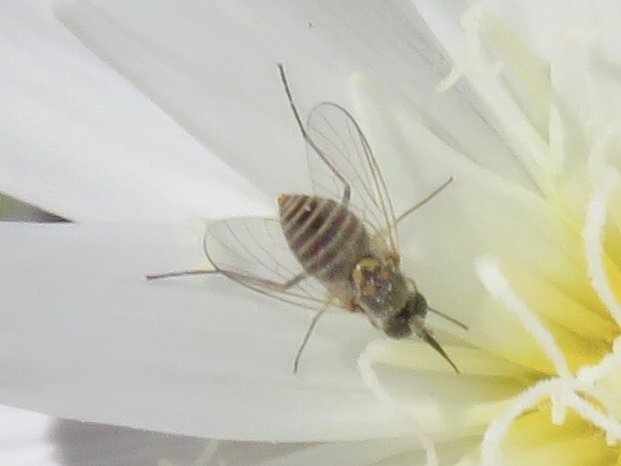
Geron bee fly on Desert chicory (Rafinesquia neomexicana).
Part three engages the reader in a deeper dive into the bees of North America, discussing bee families and their unique needs.
Finally, in part four, the reader gets some practical advice in creating pollinator-friendly landscapes. I think those of you so inclined to design your own gardens will find these chapters particularly interesting as they provide sample garden plans and recommendations by region for pollinator and butterfly host plants.
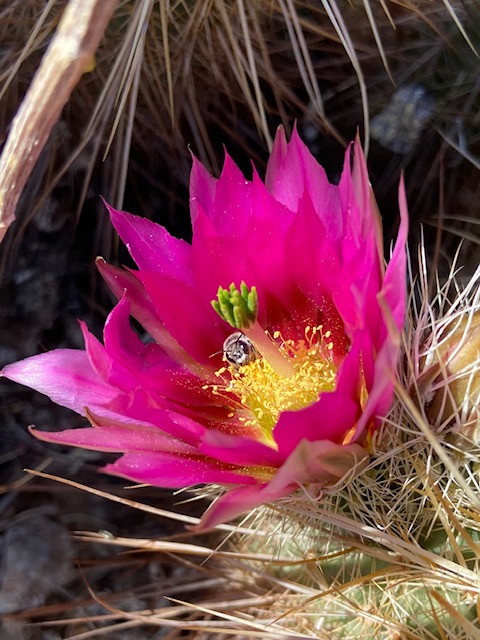
Engelmann’s hedgehog cactus (Echinocereus engelmanni) with a solitary desert bee.
Like all books designed for a wide audience, this book is inclusive of all regions of the United States. It will no doubt inspire you and leave you seeking out more specific information about pollinator-friendly plants native to the many regions of Arizona.
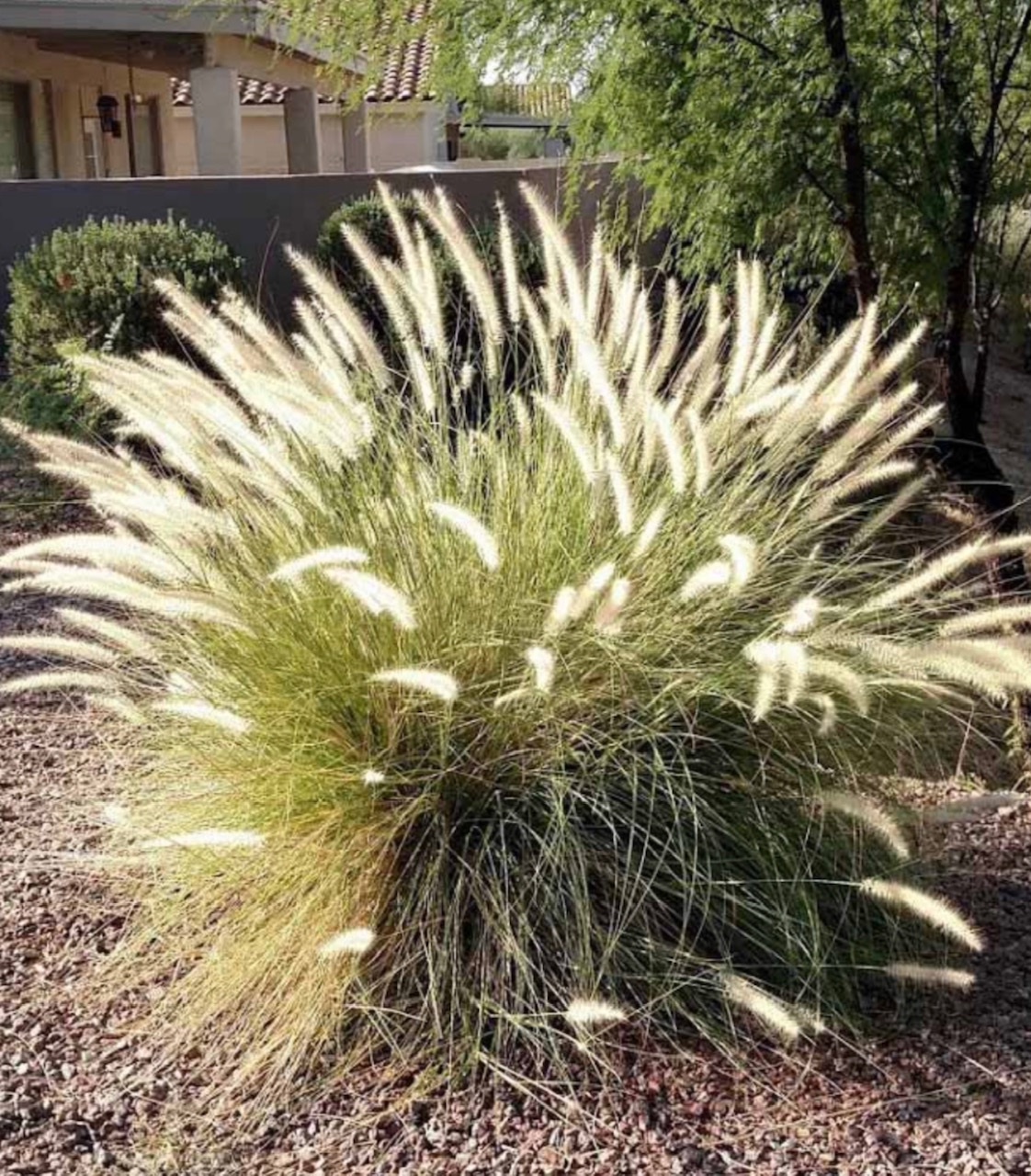
Fountain grass (Pennisetum setaceum) is a popular landscaping plant, but a dangerous invasive weed. Its seeds easily spread and invade roadsides, washes, and natural areas. As a result, Fountain grass pushes out native plants and wildlife, disrupts water flow and availability, and increases the risk and severity of wildfires. Therefore, it was listed as an Arizona noxious weed in early 2020 and is no longer sold by the nursery trade.
The Arizona Native Plant Society, along with several partners, created an informational pamphlet to help the community learn how to identify and control the spread of Fountain grass. The timing of its release coincides with the spring flowering of Fountain grass throughout Central and Southern Arizona.
 View our Chapter’s